All lessons / B1 · Plans & surprises
The letter that came early
Past perfect
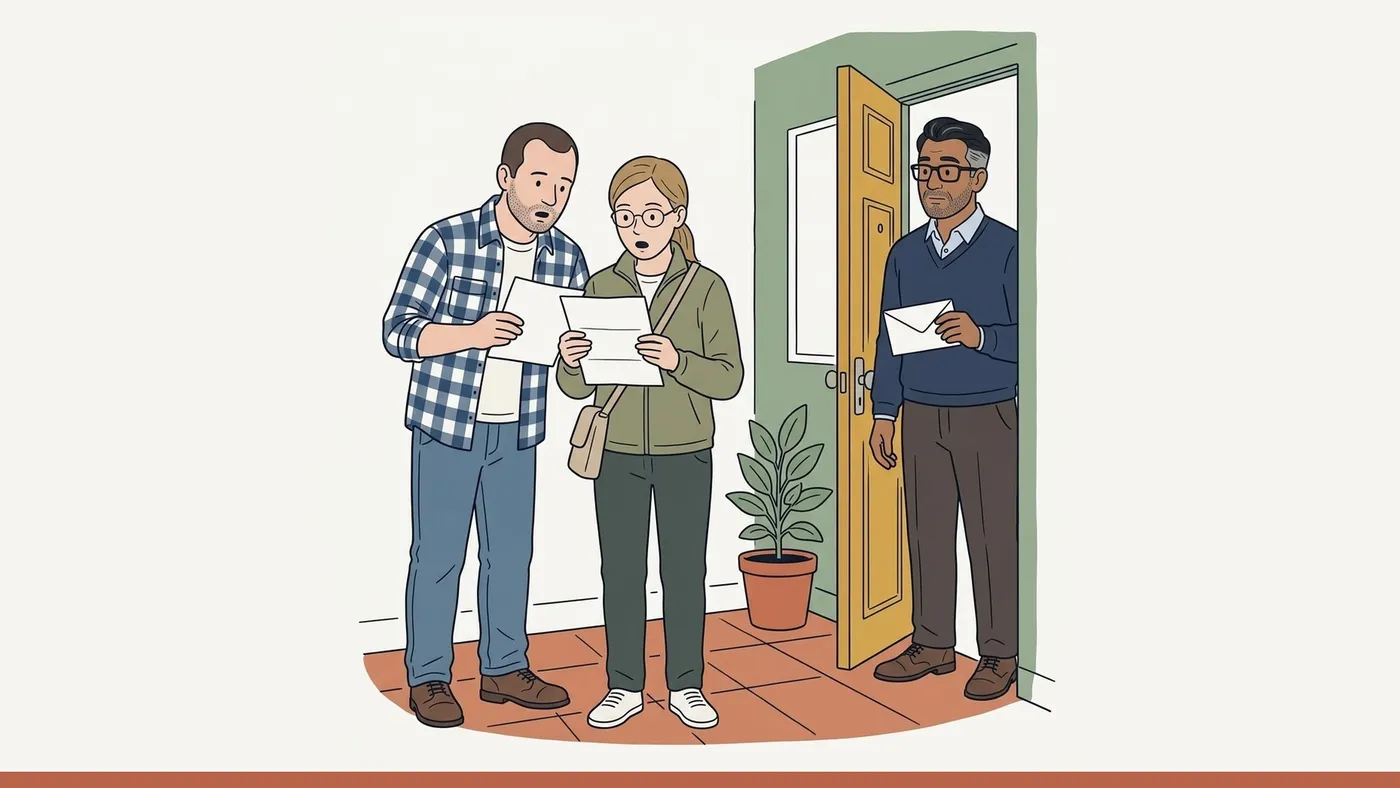
The tenancy renewal arrived while they were away. By the time Marta realised it was missing, Dev had signed for it.
- Level
- B1
- Length
- 50 min
- Exercises
- 4
One-off payment · print for your own groups · 14 days to change your mind · faktura VAT
About this lesson
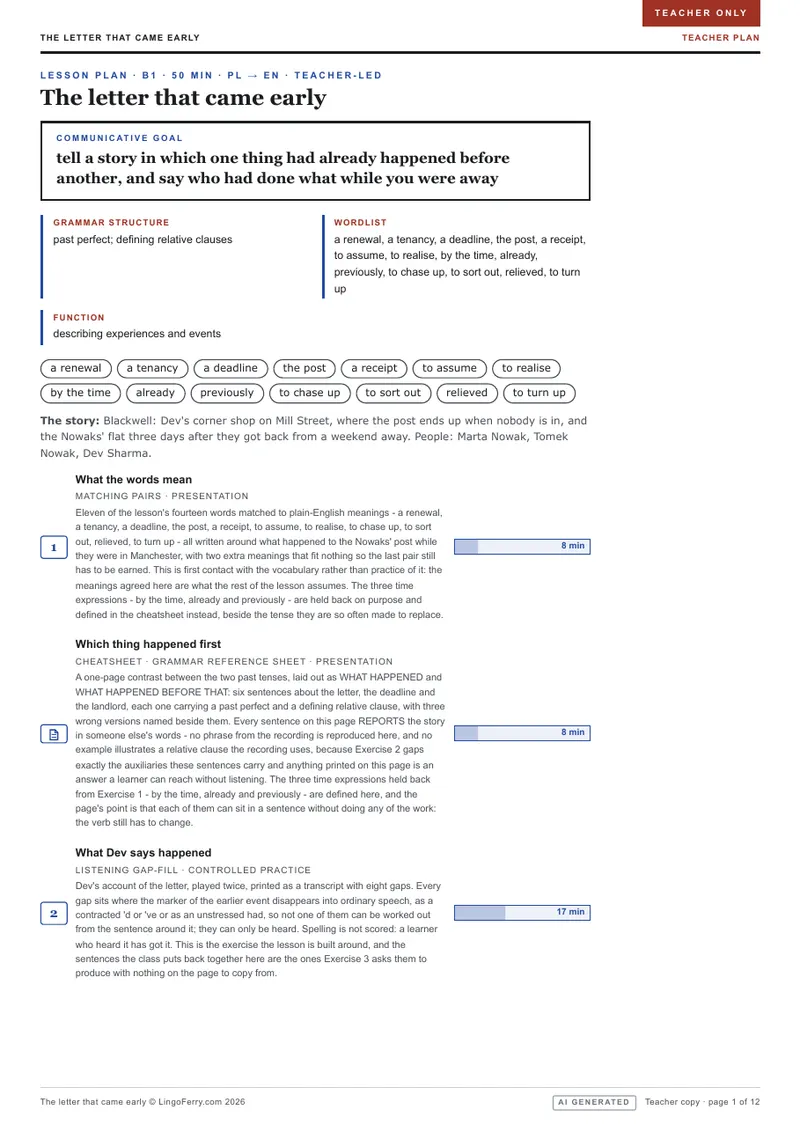
A 50-minute lesson for B1 groups who can tell a story in the past but put every event in the same tense. Marta and Tomek come back from a weekend in Manchester. Their tenancy renewal arrived while they were away, and Dev at the corner shop signed for it, read it and chased up the landlord.
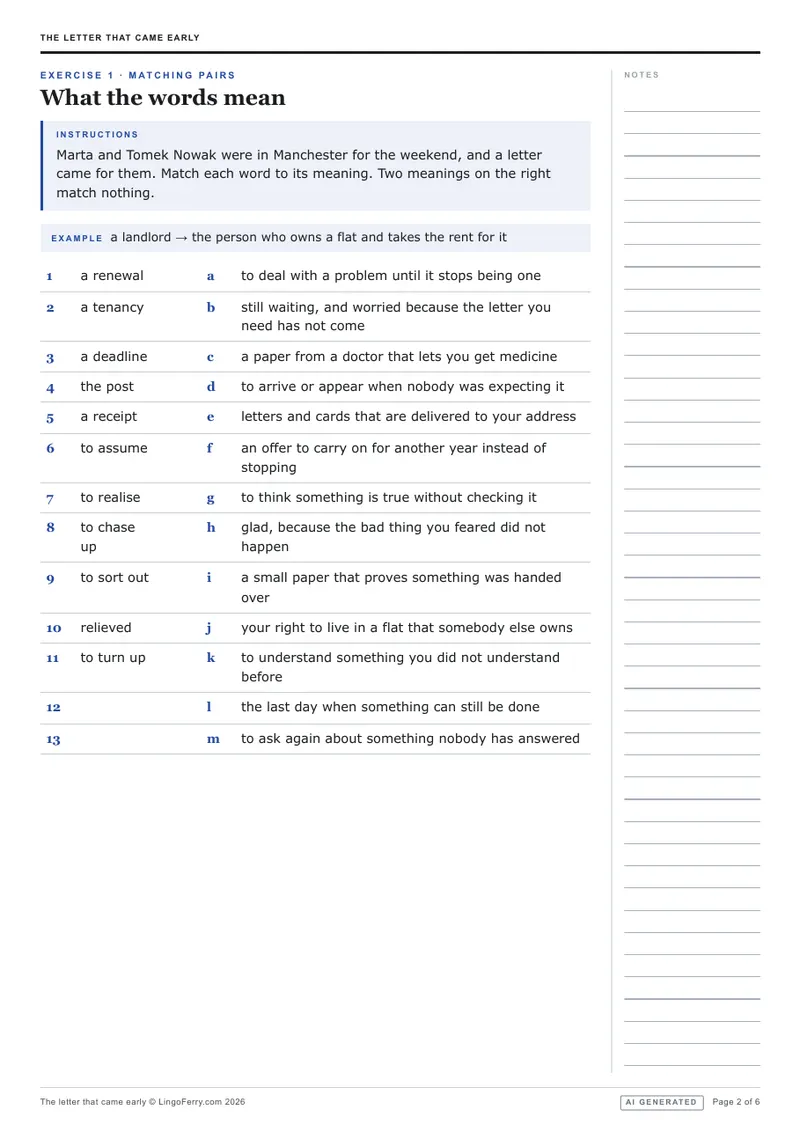
Students match eleven words from the story (renewal, deadline, receipt, chase up) to their meanings, then work from a one-page reference that sets WHAT HAPPENED beside WHAT HAPPENED BEFORE THAT. Next, Dev tells the story on a recording, played twice, with gaps where the 'd and a weak had are easy to miss. A team game closes the lesson: a square is won with had plus a past participle. Afterwards students can tell a story in which one thing had already happened before another.
Tell a story in which one thing had already happened before another.
- Grammar
- Past perfect; defining relative clauses.
- Function
- Describing experiences and events.
- Words (14)
- renewaltenancydeadlinepostreceiptassumerealiseby the timealreadypreviouslychase upsort outrelievedturn up
Why Polish speakers get this wrong
Modern Polish has no tense for "before that". A Polish speaker orders past events with a word: już, wcześniej, zanim. „Kiedy przyszedłem, on już wyszedł” is complete Polish, so When I came, he already left sounds complete too. English wants the verb to step back as well: he had already left. The word already is optional. The had is not.
The lesson attacks this three times. The reference sheet prints by the time, already and previously as extras, and shows three sentences with the right word and the wrong verb. The recording makes the weak had audible: a class that cannot hear 'd will not believe it is there. In the game a square is won by the verb, not by the time word, so already with a past simple verb takes nothing.
Free guide: Past perfect: why it's “When I came, he had already left” →
50 min · 4 exercises
- 1What the words meanMatching · Presentation8 min
- 2Which thing happened firstGrammar cheatsheet · Presentation8 min
- 3What Dev says happenedListening gap fill · Controlled practice17 min
- 4Who had done whatGame · Review12 min
Who had done what
Two teams of four. Team A picks a square and finishes it out loud, in one sentence: what had happened before that moment. It needs had plus a past participle, and the bracket word.
- By the time Marta got home, Dev ... (the post)
- By the time the postman came, Marta ... (already)
- By the time Marta asked, the letter ... (to turn up)
- By the time Marta rang, Dev ... (to chase up)
- Dev rang the landlord. Marta got back. (by the time)
As printed on the student sheet. Answers are in the teacher pack.
- 1Student pack6 pages · A4 PDF
- 2Teacher pack: plan, notes, answer key12 pages · A4 PDF
- 3Recording (MP3), 0:58Also plays from the QR code on the sheet
Questions about this lesson
Is there a recording, and how is it used?
Yes. Exercise 2, "What Dev says happened", uses a 58-second MP3 of Dev telling the story, with a QR code on the student sheet. The notes say to play it twice without stopping and to replay single lines only while you go through the answers.
Can the game be played with one student?
Yes. "Who had done what" prints a version for one player: go along the rows, say each sentence, write had plus the participle in the square, and stop after three misses. Twelve wins. The notes suggest giving that learner the list of model sentences to check the verbs.
What is in the teacher pack?
Twelve pages: the plan, the answer keys, and notes for each exercise on setup, timing, what to listen for and what will go wrong. For example, they warn that students will write had at the two gaps where the recording says 've.