All mistakes / B1
Past perfect: why it's “When I came, he had already left”
When you tell a story in the past and go back to something that happened even earlier, English puts the earlier event in the past perfect: “When I came, he had already left.” The word already is optional. The had is not.
What it sounds like
What the mistake looks like
“When I came, he already left.” “By the time we got to the station, the train already went.” “I didn't know her. I never met her before.” Each sentence has the right time word and the wrong verb. To a British listener, “When I came, he left” means he walked out after you arrived, perhaps because you arrived; the already only makes it sound odd.
It is a quieter mistake than most, because the story still hangs together. But it can change the meaning, and in a longer story the listener loses track of what happened first.
Once learners have met the past perfect, the opposite appears: had on every past verb. “When Marta had come home, she had opened the post.” Nothing in that story happened out of order, so nothing needs to step back.
Why Polish speakers make it
Modern Polish has no tense for “before that”. It orders past events with words: już, wcześniej, zanim, przedtem. „Kiedy przyszedłem, on już wyszedł” is complete, correct Polish; the verb is an ordinary past, and już does all the work. So the English sentence with already and a plain past feels complete too.
Polish did once have such a tense, the czas zaprzeszły: „wyszedł był”, „poszedł był”. You will find it in older literature, but it is not used in everyday Polish today, so it gives learners no help.
Aspect doesn't do the job either. „Wyszedł” is perfective, so the leaving was completed, but it says nothing about whether it happened before or after I arrived. And spoken English makes things harder: had shrinks to 'd or to a weak form, so learners rarely hear the very form they are supposed to use.
The rule: two past events, told out of order
The past perfect is had + the third form of the verb: had left, had gone, had signed. Use it for an event that happened before another past event you are already talking about. You need two past events, told out of the order they happened in: “When Marta got home, Dev had already signed for the letter.” The signing came first but is mentioned second.
Compare: “When I arrived, he left” (I arrived, then he left) and “When I arrived, he had left” (he left, then I arrived). With when, the tense is the only thing that shows the order.
If you tell events in the order they happened, use the past simple for all of them: “Marta came home, opened the post and rang Dev.” With before and after, the linking word itself shows the order, so the past simple is often enough: “He left before I arrived.” “After I finished, I went home” and “After I had finished, I went home” are both correct.
Some words often travel with it: by the time, already, never … before, just. “By the time Dev rang, the deadline had passed.” “She had never flown before.” But these words are extras: change the verb first, then add the word if you want it. And don't use the present perfect for something that came before a past event: “Dev has rung the landlord before Marta got home” mixes now and then; the correct form is “Dev had rung”.
In speech, listen for 'd. “He'd left” is had; “He'd leave” is would. The next word tells you which: a third form such as left or gone means had, a base form such as leave or go means would. The one exception is 'd better, which is had: “You'd better go.”
How to fix it
For learners: before a sentence with when or by the time, ask yourself which thing happened first. If the first event comes second in your sentence, it needs had.
Tell a short story twice. First in order: “I got up late, missed the bus and ran to work.” Then from the end: “When I got to work, the meeting had already started. I had missed the bus.” Saying both versions shows you exactly where had belongs.
Train your ear. Listen to podcasts or audiobooks told in the past and notice every 'd. It is far more common than most learners think, and once you can hear it you will start using it.
For teachers: expect the right time word with the wrong verb, and correct the verb while leaving already where it is. As soon as the rule lands, watch for the opposite, had everywhere. One test covers both: were the events told out of order? A listening task with gaps on the weak had is worth more than an extra page of rules, because a class that can't hear 'd won't believe it is there.
How lesson B1.1 works on it
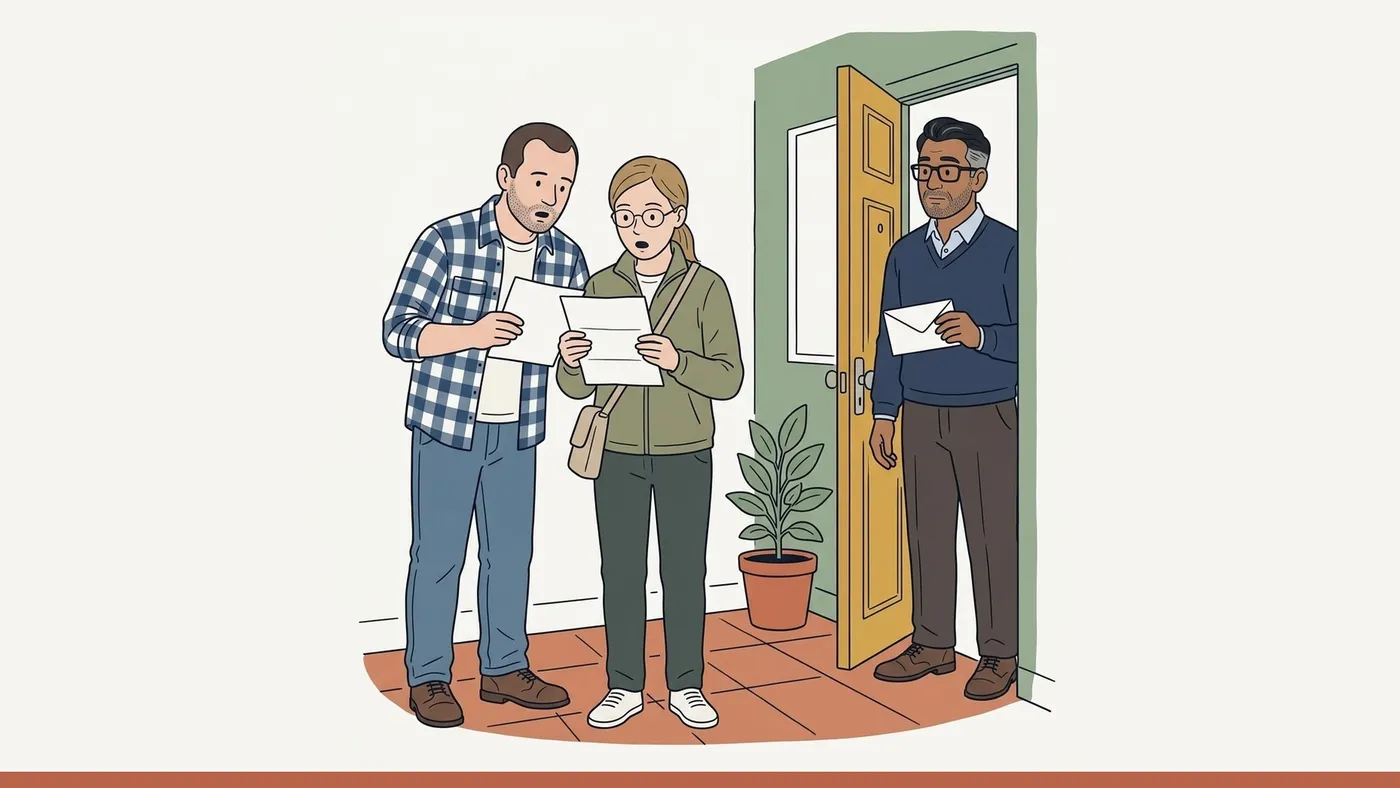
Lesson B1.1, “The letter that came early”, takes 50 minutes. Marta and Tomek come back from a weekend in Manchester. Their tenancy renewal arrived while they were away, and Dev at the corner shop signed for it, read it and chased up the landlord.
Students first match eleven words from the story, such as renewal, deadline, receipt and chase up, to their meanings. The one-page reference sheet, “Which thing happened first”, sets WHAT HAPPENED beside WHAT HAPPENED BEFORE THAT. By the time, already and previously appear there as extras, and three sentences show what goes wrong: the right word with the wrong verb, the present perfect before a past event, and had on everything.
Next, Dev tells the story on a 58-second recording, played twice; a QR code on the sheet plays it. Its seven gaps fall on 'd, an unstressed had and two places where he says 've, and the teacher notes warn that students will write had there too. The lesson closes with a team game, “Who had done what”: a square is won only with had plus a past participle, so already with a past simple verb takes nothing.
Check yourself
Put the verb in brackets into the past simple or the past perfect.
- When we arrived at the cinema, the film ___ already ___. (start)
Answer
had already started
- By the time Marta got home, Dev ___ for the letter. (sign)
Answer
had signed
- When the phone rang, I ___ it straight away. (answer)
Answer
answered
- She was nervous because she ___ never ___ on a plane before. (be)
Answer
had never been
- Tomek ___ the letter, put it in his pocket and went out. (read)
Answer
read
- By the time Dev rang the landlord, the deadline ___. (pass)
Answer
had passed
- When I got to the party, Isla ___ home, so I didn't see her. (go)
Answer
had gone (or: had already gone)
- When I walked in, everyone was eating: they ___ dinner without me. (start)
Answer
had started
The letter that came early
Past perfect