All mistakes / B2
He hid, not “He hid himself”: reflexive pronouns and Polish się
Most Polish verbs with się have an English equivalent with no pronoun at all: „ukryć się” is hide, „spotkać się” is meet, „okazać się” is turn out. Translating się as himself or itself gives “He hid himself” and “It turned out itself”, where English simply says “He hid” and “It turned out”.
What it sounds like
What the mistake looks like
“He hid himself.” “We met ourselves at six.” “It turned out itself to be nothing.” “I have to concentrate myself.” Every one of these has an extra pronoun, and every one comes from a Polish verb with się. Some are simply wrong: “met ourselves”, “turned out itself”. Others are grammatical but sound odd or overdramatic: “He hid himself” is possible English, but it isn't what people say about someone who just went and hid.
The mistake grows with the learner's level. Beginners use few verbs; at B2 you use dozens of verbs that take się in Polish: happen, change, start, feel, decide, worry. Each one is a chance to add a pronoun English doesn't want.
Why Polish causes it
In Polish się is everywhere, and much of the time it isn't reflexive in any real sense. It turns a transitive verb into an intransitive one: „otworzyć drzwi” becomes „drzwi się otworzyły”. It marks actions people do to each other: „spotkaliśmy się”, „znamy się”. It is simply part of the verb, which can't exist without it: „bać się”, „śmiać się”, „wydarzyć się”, „okazać się”.
English reflexive pronouns are usually first taught through true reflexives such as „skaleczyć się” = cut yourself, so it is easy to conclude that się always means myself, yourself or himself. Learners then carry it across with every verb that has it.
English has a different system. Many English verbs can be used with or without an object and need no marker either way: “She opened the door” and “The door opened”, “They changed the plan” and “The plan changed”. What Polish does with się, English usually does with nothing at all, and sometimes with each other or get.
The rule: when English needs -self
English uses myself, yourself, himself, herself, itself, ourselves, yourselves and themselves in three situations.
1. When the subject really does something to itself that it could have done to someone else: “I cut myself”, “She hurt herself”, “He introduced himself”, “Help yourself”, “Enjoy yourselves”. Enjoy needs an object, so “We enjoyed” on its own is wrong: “We enjoyed ourselves” or “We enjoyed the evening”.
2. For emphasis: “I painted it myself”, “The owner himself came down”. By yourself means alone: “She lives by herself.”
3. For contrast or emphasis with a verb that is normally used without a pronoun: “She signed the children up for swimming and herself up for yoga.” “He hid himself” is grammatical too, but marked: it stresses a deliberate effort to stay out of sight. Without that point to make, the normal sentences are “She signed up” and “He hid”.
Otherwise English normally uses no pronoun. That covers daily routine (sit down, get up, wake up, hurry, get dressed), feelings and states (feel, worry, relax, concentrate, be afraid), events (happen, start, finish, change, open, close, turn out) and mental verbs (decide, wonder, agree). Wash and shave can take a pronoun when the person or the effort matters, “She's too ill to wash herself”, but the everyday sentence is just “He shaved”.
Polish się between two people is each other, or often nothing: „Znamy się” = “We know each other”, „Spotkaliśmy się” = “We met”. And many się verbs become get + an adjective or the third form of the verb: „ubrać się” = get dressed, „przebrać się” = get changed, „zgubić się” = get lost, „ożenić się” = get married.
How to practise and fix it
Keep a list of the się verbs you use most, with the English next to each as a phrase: „spotkać się” → meet (each other), „okazać się” → turn out, „zdecydować się” → decide, „czuć się” → feel. Learn them as bare English verbs, not as a verb plus a pronoun.
When you write, look at every -self. Ask: can you do this to somebody else? If not (you can't happen or turn out somebody), delete it. If yes, check that it is really needed: “I cut myself”, yes; “I dressed myself”, only if you are making a point.
Watch the verbs that feel impossible without się: happen, turn out, hide, meet. That is where the extra pronoun survives longest.
For teachers: correct it as one pattern, not verb by verb. A single line on the board (English leaves the pronoun out where Polish has się) covers most cases, and a correct sentence with a verb like hide among the items to fix shows who has learned the pattern and who is still adding pronouns out of habit.
How lesson B2.4 works on it
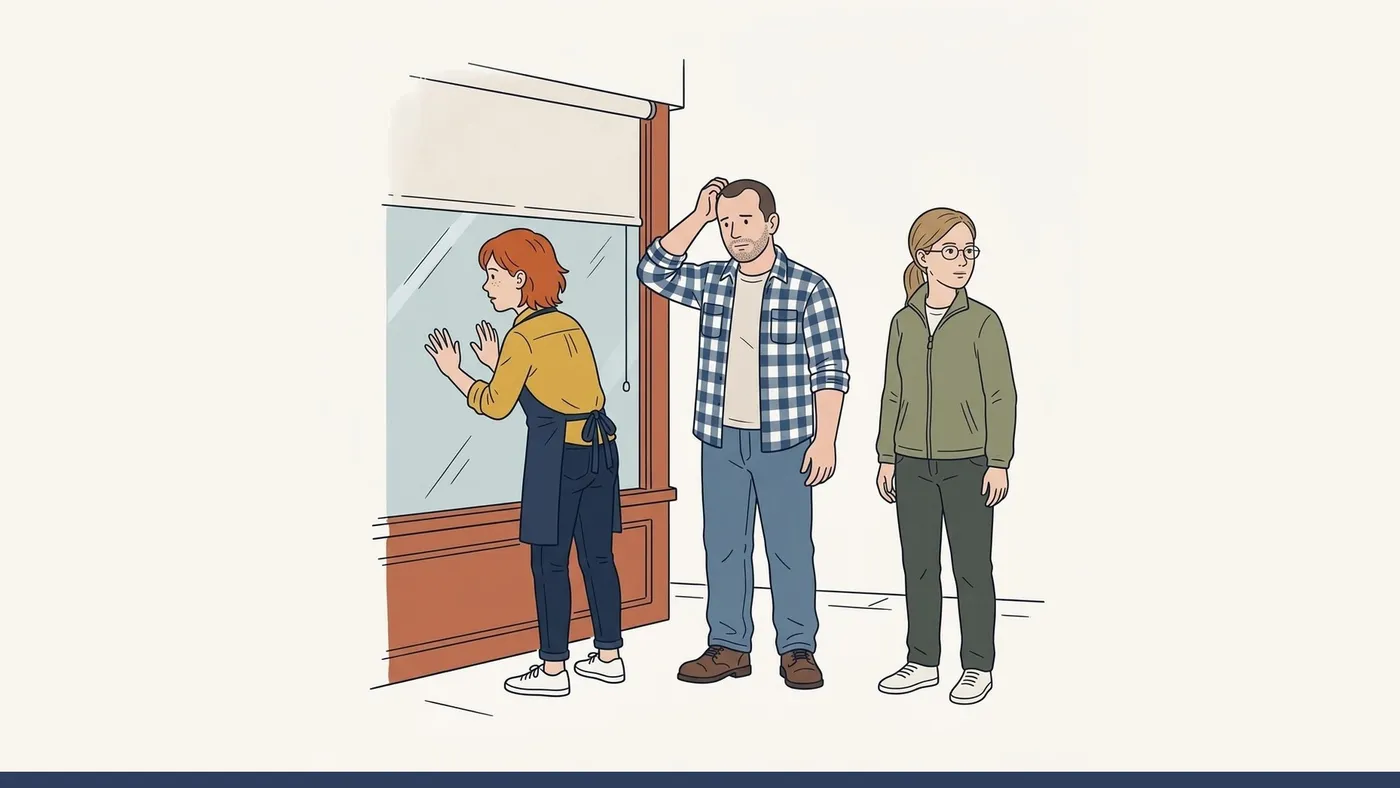
Lesson B2.4, “He can't have gone far”, takes 60 minutes. Every Thursday Dev shuts his shop at five and won't say where he goes, and the other three build theories with can't have, needn't have and a scale of certainty from bound to down to doubt. A lesson full of hiding, meeting and things turning out gives the extra pronoun plenty of chances.
The ten rewrites print hide, disappear, turn out, meet and sign up without a pronoun, and the teacher notes say to treat hid himself, met themselves and signed himself up as one error, corrected once as a pattern. In the discussion, the correct forms are printed in the questions and the phrase bank (moved, starts, happens, gets changed), so the teacher can point at the line instead of explaining.
The final error correction plants the extra pronoun in six of its twelve sentences, from “Marta and Tomek met themselves” to “For all we know it turned out itself to be nothing at all”, and the key accepts met each other as well. One correct sentence uses hides with no pronoun, a trap because Polish „ukrywa się” makes hides himself feel obligatory. And the last of the six planted errors ends in a real reflexive, a man may keep an evening to himself: that himself stays.
Check yourself
Remove the reflexive pronoun where English doesn't use one. Two sentences are already correct: write “Correct”.
- We met ourselves outside the station.
Answer
We met outside the station. (or: We met each other outside the station.)
- Something strange happened itself last night.
Answer
Something strange happened last night.
- I can't concentrate myself with that music on.
Answer
I can't concentrate with that music on.
- She cut herself on a broken glass.
Answer
Correct.
- The meeting started itself at ten.
Answer
The meeting started at ten.
- I feel myself much better today.
Answer
I feel much better today.
- They really enjoyed themselves at the party.
Answer
Correct.
- The rumour turned out itself to be true.
Answer
The rumour turned out to be true.
He can't have gone far
Speculating about the past