All mistakes / A2
I should go, not “I should to go”: modal verbs without to
After should, and after the other modal verbs (can, could, must, will, would, may, might), the next verb comes without to: “I should go”, never “I should to go”. The to belongs to have to, need to and ought to, which is exactly why it gets carried over.
What it sounds like
What the mistake looks like
The sentence is short and the meaning is clear: “I should to go.” “You should to call the landlord.” The extra to changes nothing for the listener, but it marks the speaker as a learner at once, and it tends to spread: “I must to go”, “I can to swim”.
It travels with two relatives. Should gets treated like an ordinary verb: “Do I should…?”, “She shoulds…”. And in the other direction, to goes missing where it does belong: “You have register.”
In the same situations, requests often come out as bare imperatives, “Fill in this form for me”, which is a politeness problem more than a grammar one; see the guide to polite requests.
Why Polish causes it
Polish powinien is one inflected word: powinienem, powinnaś, powinniśmy. It is followed by a plain infinitive: „powinienem iść”, „powinnaś zadzwonić”. And the Polish infinitive is a single word ending in -ć or -c, with no separate marker in front of it.
English learners meet the infinitive as to go, to call, to sign, often straight from a word list: iść = to go. So wherever Polish has an infinitive, they insert the English form they learned, and „powinienem iść” becomes I should + to go. Have to reinforces the habit: „muszę iść” is I have to go, with to, so should seems to need one as well.
Modal verbs are odd from a Polish point of view anyway. They take no -s in the third person, have no -ing form and make questions and negatives without do. Polish powinien, móc and musieć behave much more like ordinary verbs, so learners give should the ordinary treatment: “Do I should?”, “She shoulds.”
The rule in English
The modal verbs, can, could, may, might, must, shall, should, will and would, are followed by the bare infinitive, the verb with no to: “You should sign it”, “We must register”, “Could you help me?”
They never change form: no -s (she should, not she shoulds), no to after them, and no do in questions and negatives: “Should I bring the letter?”, “You shouldn't wait until Friday.”
Some expressions with similar meanings do take to, because to is part of them: have to, need to, ought to, be able to. “You have to register at the council.” “We need to open a bank account.” “You ought to call him.” Ought to means much the same as should, which is a good reason to learn it once should is secure.
Nuances worth knowing. Should is advice, or what would be right; have to is an obligation from outside: “You have to register” (it's required), “You should register early” (it's a good idea). Don't have to means there is no need, while mustn't means it is not allowed: “You don't have to pay the deposit again” is a different message from “You mustn't pay the deposit.” For the past, should takes have and the past participle: “I should have checked the deadline.”
How to practise it
Learn should together with its verb as one block and say it out loud: should go, should call, should check. Line it up with modals you already use without to: “I can swim. I must go. I should go.”
Keep two short lists apart: without to (can, could, must, should, will, would, might) and with to (have to, need to, ought to). When you write, check every should, and if the next word is to, cross it out.
Give yourself advice for next week in five sentences: “I should call my mum. I should go to bed earlier.” Then change two of them to have to and hear where the to appears.
For teachers: explaining the bare infinitive rarely stops the to on its own. Printing should welded to its subject, with nothing after it that starts with to, gives the mistake nowhere to happen. In speaking tasks, it helps to write sentences down exactly as heard and go over a few between two rounds, so the second round has something to fix.
How lesson A2.4 works on it
Lesson A2.4 of English for Polish Adults, “You have to register”, takes 40 minutes and has no warm-up. The council, the National Insurance number, the bank, the deposit: Dev keeps a laminated sheet under the till listing what a new arrival has to do, and Marta and Tomek have until Friday.
The lesson builds should so that to has nowhere to go. In the opening substitution table each subject is welded to its modal on the left (You have to, Marta has to, Tomek should), the to of have to printed with it, and nothing on the right begins with to. Next, students look at Dev's list in the picture and write eight sentences about Marta and Tomek from frames that include doesn't have to and shouldn't. The rubric has a line for exactly this: the plain verb straight after should and after have to.
The lesson ends with a role play: Tomek wants Dev to fill in his council form, and Dev has a queue and won't. Tomek only gets anywhere by asking properly, with a phrase bank that starts “Could you help me with this, please?” The teacher notes list three things to listen for: the extra to after should, pairs working only in imperatives, and Dev explaining everything at once. They suggest boarding a few of the sentences heard between the two rounds.
Check yourself
Six sentences have one mistake each and two are correct. Write the correct sentence, or write “Correct”.
- I should to call my landlord.
Answer
I should call my landlord.
- We must to be there at nine.
Answer
We must be there at nine.
- Do I should sign it myself?
Answer
Should I sign it myself?
- You have fill in the form.
Answer
You have to fill in the form.
- She shoulds ask for a receipt.
Answer
She should ask for a receipt.
- They need to open a bank account.
Answer
Correct.
- Can you to help me with this?
Answer
Can you help me with this?
- You ought to check the deadline.
Answer
Correct.
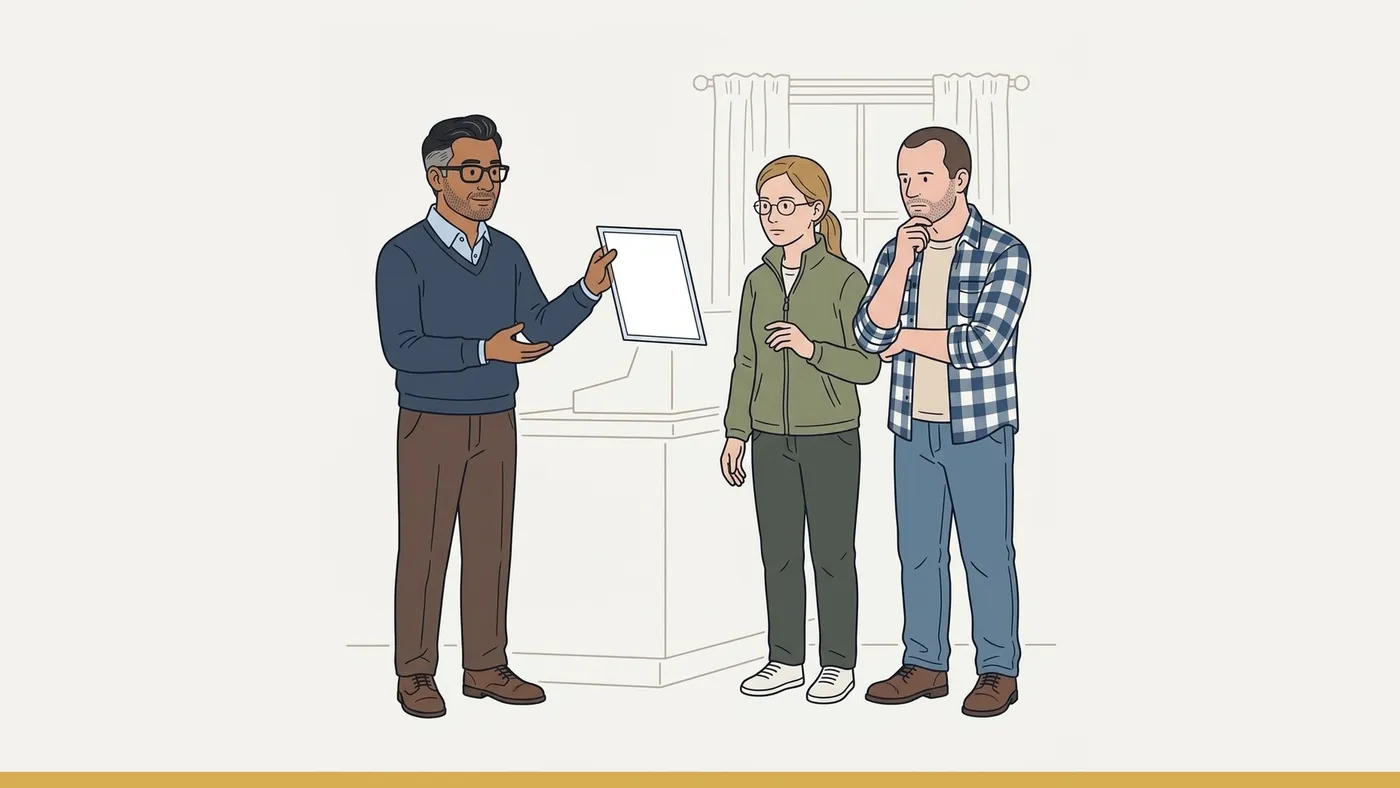
You have to register
Have to · should